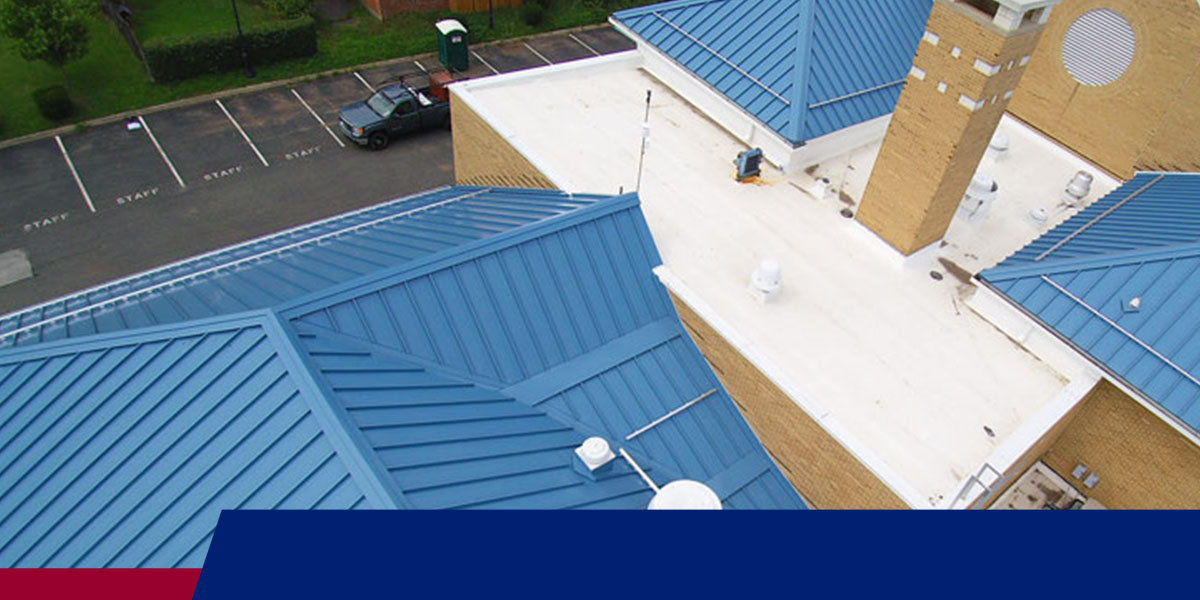
Implementing winter commercial roof best practices is essential for preventing catastrophic structural failure, maintaining energy efficiency and protecting business continuity. Without proper preparation, minor vulnerabilities can quickly escalate into costly interior damage and operational downtime.
For commercial property owners, a proactive maintenance strategy helps ensure that the building remains watertight and the structural integrity of the roof deck is protected against frigid temperatures, freeze-thaw cycles and winter precipitation.
How Seasonal Changes Affect Commercial Roofing Systems
Understanding the mechanics of how winter weather interacts with roofing materials is the first step in effective asset management. Winter introduces several physical stressors on commercial roofs, including:
- Thermal expansion and contraction: As temperatures fluctuate, roofing membranes, metal flashings and seams expand and contract. Over time, this thermal shock can cause materials to become brittle, leading to splits in the membrane or the pulling apart of critical seams.
- Freeze–thaw cycles: When water enters a small crack or a clogged drain during a sunny afternoon, it remains liquid. As temperatures plummet at night, that water freezes and expands. This expansion acts like a wedge, widening cracks and deepening splits. This cycle can turn a minor surface blemish into a significant leak in just a few weeks.
- Ice, snow and wind-driven rain: Winter storms bring a diverse range of precipitation forms. Wind-driven rain can find its way under flashings that aren’t properly secured, while heavy snow creates sustained pressure on the entire structural deck.
- Impact on roof warranties: Most commercial roof warranties require the owner to perform “reasonable maintenance.” If a leak occurs due to a preventable issue, such as a clogged drain causing an ice dam, the manufacturer may deny the claim, citing negligence.
Common Winter-Related Commercial Roof Failures
If a roof enters the winter season with underlying weaknesses, the cold will find them. Common failures include:
- Blistering and membrane shrinkage: Trapped moisture in the roof assembly can freeze and expand, creating blisters. Additionally, ethylene propylene diene monomer (EPDM) and other synthetic membranes can shrink over time. Winter cold accelerates this process, often pulling the membrane away from the roof’s perimeter.
- Gutter and drain blockages: Leftover autumn leaves and debris are the primary culprits for commercial roof failures. When drains are blocked, water backs up, freezes and forms ice dams. These dams prevent further drainage and can force water upward under the roof’s edge.
- Overstressed structures: While commercial roofs can handle a specific snow load, heavy, wet snow or significant accumulation can exceed the roof’s weight limit. This weight puts immense stress on the structure, which can cause the roof to sag, crack or in severe cases, collapse.
- Premature aging: Commercial roofs expand in the sun and contract in subfreezing temperatures. Repeated cycles of rapid temperature changes reduce the overall tensile strength of the roofing membrane. Over time, roofing materials lose their flexibility and ability to stretch, making them more prone to cracks and splits.
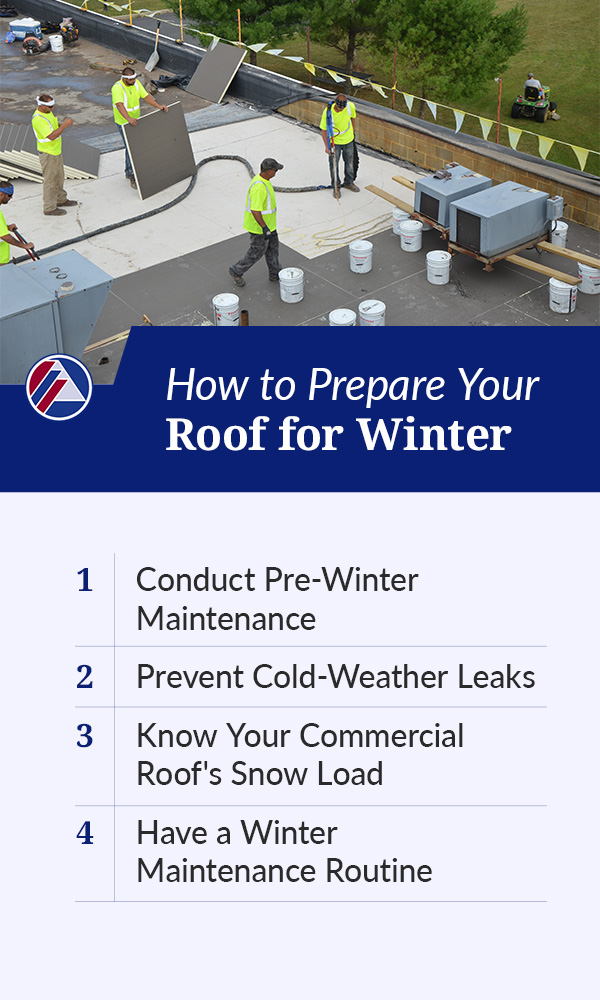
How to Prepare Your Roof for Winter
The best time to fix winter problems is often in the fall, well before the first freeze of the season, to prevent small issues from becoming expensive emergencies. You should also plan to re-make additional repairs in the early spring after inspecting for winter damage. Addressing roofing issues immediately — such as leaks or foundation cracks — in winter helps prevent them from worsening before temperatures begin to rise again.
1. Conduct Pre-Winter Maintenance
A proactive assessment ensures that you are not paying for emergency “cold-process” repairs, which are often more expensive and less permanent than repairs done in temperate weather. Start with these pillars of pre-winter maintenance:
- Schedule a professional inspection: While facility managers can conduct a walk-through, a professional commercial roofing contractor, such as David Maines & Associates, Inc., has the expertise and specialized technology to identify and address issues not easily visible. Examples include failing lap seams or moisture beneath the membrane.
- Document everything: Document findings meticulously, using clear photos and notes, and prioritize issues such as compromised flashings, roof edges and any signs of membrane damage or ponding water. Create a prioritized repair list to address these issues before the harsh weather sets in.
- Inspect critical details: Examine flashing for gaps or damage, check roof penetrations for secure seals, inspect seams for separation and look for cracks or punctures in the membrane. Pay close attention to roof valleys and drainage systems, ensuring they are clear and functional. Clogged areas can lead to severe water backup and ice dam formation.
- Clear all debris: After inspection, thoroughly clear all leaves, branches and debris from the entire roof surface, scuppers, downspouts and gutters. This helps water flow freely off the roof, preventing it from sitting, freezing and causing significant damage.
- Test systems: Run water through gutters and downspouts to confirm they are free of blockages and that the flow is directed away from the foundation.
If the roof has open seams, active leaks or compromised flashings, immediate repair is necessary before the first freeze. If the underlying insulation is dry but the membrane is aging, a roof coating or restoration might be the ideal middle ground. A full replacement is generally the safest option if more than 25% of the roof is saturated or the structural deck is compromised.
2. Prevent Cold-Weather Leaks
Winter leaks are notoriously difficult to track because water can travel along a steel deck or purlin for several feet before it actually drips into the building. Preventing that entry is paramount. To prepare for targeted leak prevention before temperatures drop, focus on a comprehensive inspection and sealing strategy.
Seal and reinforce weak points, paying specific attention to known areas of vulnerability. These locations are common points of water intrusion due to complex flashing details or exposure. Conduct a thorough inspection of the interior for signs of existing moisture problems. Look for stained ceilings, musty odors or visible mold growth, which indicate current or past leaks that need to be addressed. Check the condition of all waterproofing details and transitions between wall panels, and ensure materials provide continuous protection against water ingress.
3. Know Your Commercial Roof’s Snow Load
Determine your roof’s design snow load, which is the weight it can bear. Flat roofs often require more attention due to higher snow retention. Never wait until the roof is at capacity to hire a snow removal crew. Pre-schedule a contractor for removal before heavy storms.
Before the snow season begins, clearly mark skylights, drains, vents, expansion joints and heat cables so that removal crews can avoid them.
4. Have a Winter Maintenance Routine
The work doesn’t end once the snow starts. Follow these best practices for mid-winter monitoring:
- Monitor ice dams: If you see large icicles forming along the roof edge, it’s a sign that heat is escaping from the building and melting the snow, which then refreezes at the cold edge. This requires professional intervention.
- Clear access: Ensure that roof hatches and ladders are clear of ice and snow so technicians can access the roof safely and quickly in an emergency.
- Professional help: If a roof leak forms, especially in an area potentially affected by snow or ice, call a professional immediately. They can perform emergency mitigations even in sub-freezing temperatures.
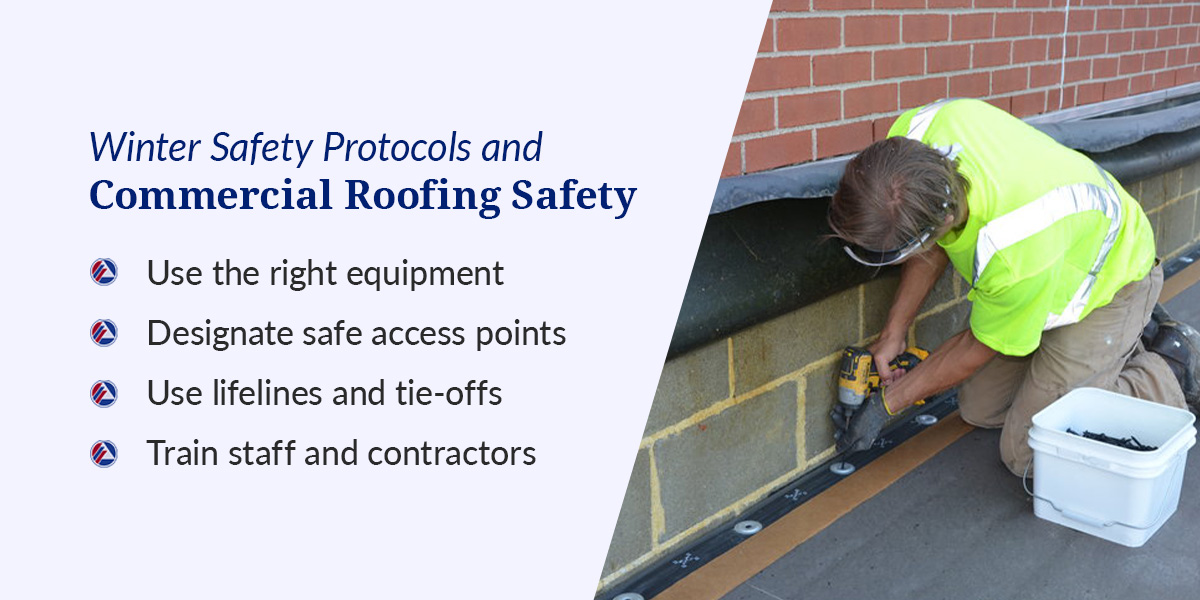
Winter Safety Protocols and Commercial Roofing Safety
Safety is not just good for your team and business. It’s also a legal requirement. Winter significantly increases the risk profile of any roofing project. The Occupational Safety and Health Administration (OSHA) requires employers to provide a safe working environment, which can become particularly challenging with winter hazards such as ice and snow. A thorough job hazard analysis (JHA) must address these specific risks.
Other tips include:
- Use the right equipment: For commercial roofing work on an unsecured edge that takes place 6 feet or more above a lower level, OSHA mandates the use of personal fall arrest systems (PFAS), guardrail systems or safety nets. This also includes using appropriate personal protective equipment (PPE), secure anchors and horizontal lifelines.
- Designate safe access points: All access points, including fixed ladders, roof hatches and temporary stair towers, should be kept clear of ice and snow and properly secured.
- Use lifelines and tie-offs: Lifelines and anchor points must be installed and used in accordance with OSHA standards to provide continuous fall protection. You can use warning lines on low-slope roofs to alert workers to unprotected edges, but they are not a substitute for active fall protection when near the edge.
- Train staff and contractors: All personnel must receive site-specific safety training on the hazards present, the proper use of fall protection equipment and emergency procedures. Have a plan to address common winter hazards like ice-covered surfaces, reduced visibility and cold stress.
Frequently Asked Questions
Here are answers to some common questions about winter commercial roof best practices:
1. How Can I Protect the Building and Its Occupants During Winter Work?
You can minimize risks to the building and its occupants during winter preparation by scheduling work during off-peak hours whenever possible. During any maintenance work, it’s essential to keep a clear line of communication between the facility manager and the person on the roof. Daily briefings can help prevent accidents and ensure everyone is aware of the day’s goals. This level of awareness can also contribute toward building protection by reducing the risk of weather-related impact or site accidents.
When performing any type of work or maintenance after dark or in low-visibility conditions, be sure to use industrial lighting and exercise extra caution. Roof maintenance should never be performed alone in case of accidents.
Ensure rooftop units (RTUs) are shielded from falling debris or snow that may be dislodged during the maintenance process. If the project involves odors, such as those from certain coatings or adhesives, ensure that heating, ventilation and air conditioning (HVAC) intakes are protected or temporarily closed to prevent fumes from entering the building.
2. How Often Should a Commercial Roof Be Inspected?
Industry standards recommend that a commercial roof be professionally inspected at least twice a year, typically during the spring and fall. Beyond the biannual standard, immediate inspections are necessary after major storms involving high winds, hail or heavy snowfall. You can also perform visual assessments from the ground after weather events. For roofs over 10 to 15 years old, increasing the frequency of monitoring is best to detect deteriorating materials. Flat roofs, in particular, benefit from diligent biannual checks for ponding water and debris.
3. When Should I Partner With a Commercial Roofing Contractor?
While your in-house maintenance team may be able to handle basic debris removal, certain signs indicate you need a professional:
- You notice cracking on the surface of the roof.
- There are persistent small leaks that keep returning.
- You can see sagging from the ground when assessing the roof’s condition.
- There is standing water on the roof that remains for 48 hours or more after precipitation.
- Your roof is approaching the end of its warranty period.
- Building heights, unsecured edges or external conditions make the roof unstable or unsafe to access.
- Fasteners, shingles or other roofing components have become dislodged or blown off.
There are various benefits of enrolling in a professional roof inspection and maintenance program, including saving money in the long run, extending the roof’s lifespan, reducing the risk of hazardous roof conditions and maintaining warranty compliance. Partnering with a professional for a preventive maintenance agreement is almost always more cost-effective than calling for emergency repairs on a holiday weekend in the middle of a blizzard.

Get Your Commercial Roof Winter-Ready Today
At David Maines & Associates, Inc., we understand that your commercial roof is a major investment in your brand and business. Our team specializes in comprehensive commercial roofing services, including replacement, restoration and repairs tailored to the unique demands of the winter season.
We start by conducting a thorough assessment of the roof structure, materials, flashing and gutters to identify potential failure points before winter weather hits. Our team will then address any existing issues such as leaks, punctures, blisters and loose fasteners to prevent them from worsening under the weight of snow or during freeze-thaw cycles. We can also provide proactive commercial waterproofing for masonry and roofing systems to help prevent moisture from seeping into building components. If a replacement is deemed necessary, our team has the expertise and equipment needed for a straightforward and seamless process.
Contact us today to request a free quote or to learn more about our commercial roof inspection and maintenance programs.
Share