When it comes to safeguarding your commercial property, the integrity of your roof is paramount. For businesses and large facilities, flat or low-slope roofs are a common architectural choice, demanding specialized roofing solutions to ensure longevity and weather resistance. But understanding the various roof membrane types is crucial for making an informed decision about your commercial roofing system.
These advanced materials provide a robust, waterproof barrier, essential for preventing leaks, enhancing energy efficiency and extending the lifespan of your commercial roof. Research from Lawrence Berkeley National Laboratory found that cool roofing materials can reduce cooling energy use and peak power demand in nonresidential buildings with low-slope roofs.
What Exactly Is a Membrane Roof?
A membrane roof, also known as a flat roof membrane, is a roofing system primarily used on commercial buildings with low-slope or flat roof designs. Unlike pitched roofs that rely on gravity for water runoff, membrane roofs create a continuous, waterproof barrier across the entire surface. This barrier is typically made of various flexible, durable materials applied in large sheets or layers, effectively sealing the roof deck against moisture penetration.
The goal is to provide exceptional protection against water, UV radiation and extreme weather conditions, which is particularly vital for the expansive surfaces of commercial structures.
Key Roof Membrane Types for Commercial Properties
The commercial roofing industry offers several proven roof membrane types, each with unique characteristics and advantages. Understanding these differences can help you appreciate the value of selecting the right material for your facility.
1. Built-Up Roofing (BUR)
BUR is one of the oldest and most established commercial roofing systems, often considered a traditional flat roof membrane. This multi-layered system is constructed on-site by alternating layers of felt or fabric plies with hot-applied bitumen — asphalt, coal tar or cold-applied adhesive. BUR is widely used on commercial and industrial buildings with flat or low-slope roofs, including manufacturing plants, warehouses and educational institutions. Its robust nature makes it suitable for roofs that may experience foot traffic or need to support heavy equipment.
BUR systems boast a proven track record of durability and performance, often lasting 25 years or more with proper maintenance. They offer excellent fire resistance, are incredibly puncture- and heavy-load-resistant and provide superior waterproofing due to their multi-layered construction.
2. Ethylene Propylene Diene Monomer Roofing (EPDM)
EPDM roofing is a widely used single-ply roof membrane, often referred to as a rubber roof membrane due to its synthetic rubber composition. This material is derived from oil and natural gas and is designed to be extremely durable and long-lasting. EPDM membranes are installed in large sheets that can be fully adhered, mechanically fastened or ballasted with stone, creating a flexible and resilient roof surface that resembles a stretched-out inner tube.
EPDM roofing offers exceptional resistance to wear, fatigue and impact, helping it hold up in diverse weather conditions. Its waterproof composition, UV and ozone resistance and ability to withstand extreme temperature fluctuations contribute to a cost-effective, reliable long-term roofing solution.
3. Polyvinyl Chloride Roofing (PVC)
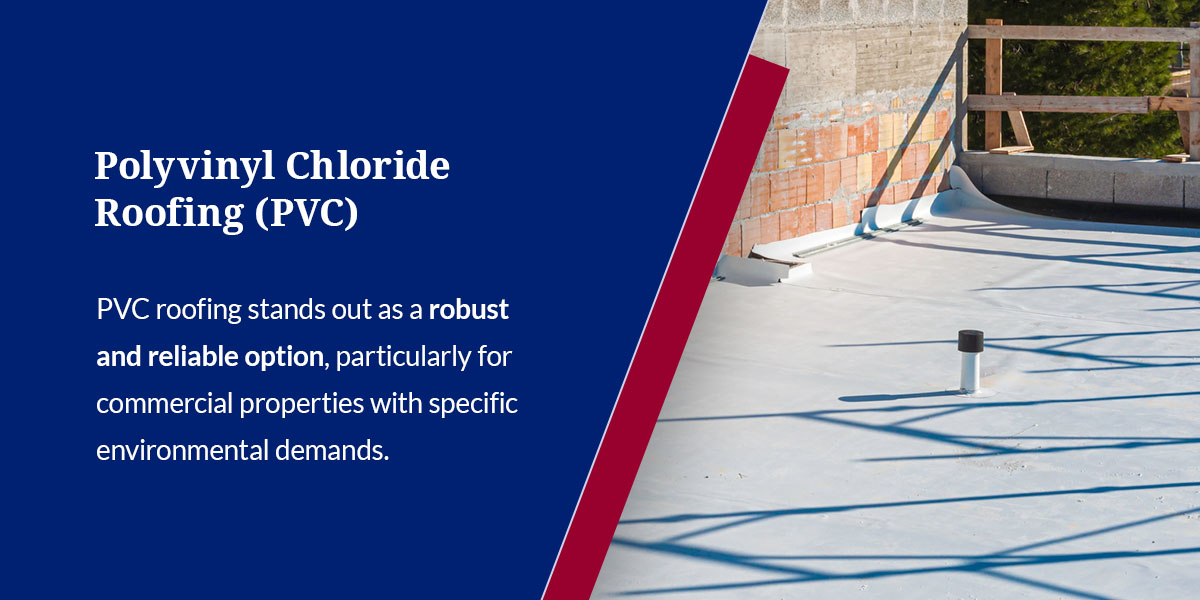
PVC roofing stands out as a robust and reliable option, particularly for commercial properties with specific environmental demands. Its unique properties contribute to its widespread use and enduring performance:
- Characteristics: PVC roofing is a strong, durable thermoplastic membrane installed by heat-welding overlapping sheets to create a monolithic, watertight seal. The thermoplastic nature of PVC allows it to become soft when heated and rigid when cooled, supporting secure, long-lasting installation.
- Common uses: It is ideal for commercial facilities requiring high hygiene and chemical resistance, such as food production plants, restaurants and medical institutions, due to its smooth surface and protection against grease, oils and chemical effluents.
- Advantages: PVC membranes are highly resistant to chemicals, fire and grease, offering superior protection in demanding commercial environments. PVC is also energy-efficient, often available in reflective colors that help reduce cooling costs, and resistant to UV radiation. PVC may also be recyclable through manufacturer take-back programs, supporting more sustainable building practices.
4. Thermoplastic Polyolefin Roofing (TPO)
TPO roofing has emerged as a leading choice for commercial applications, offering a blend of durability and cost-effectiveness. Understanding its core features can help in evaluating its suitability for various projects:
- Characteristics: TPO is a popular thermoplastic polyolefin roof membrane, similar to PVC, known for its performance and cost-effectiveness. It is installed in large sheets with heat-welded seams, creating an impermeable barrier.
- Common uses: Widely used on commercial buildings with flat or low-slope roofs, including retail spaces, industrial facilities and office buildings, due to its balance of performance and affordability.
- Advantages: TPO offers excellent durability against various temperatures and harsh weather. It also offers energy efficiency, especially in lighter colors that reflect sunlight.
For a retail store, installing a cool roof reduced average air conditioning energy use by about 52% during the monitored period and reduced average peak demand by about 10 W/m² of conditioned area on hot days.
5. Modified Bitumen (MB)
MB roofing offers an advanced solution that builds upon traditional systems, providing enhanced flexibility and durability for various commercial structures. Its unique composition makes it a versatile choice for challenging environments.
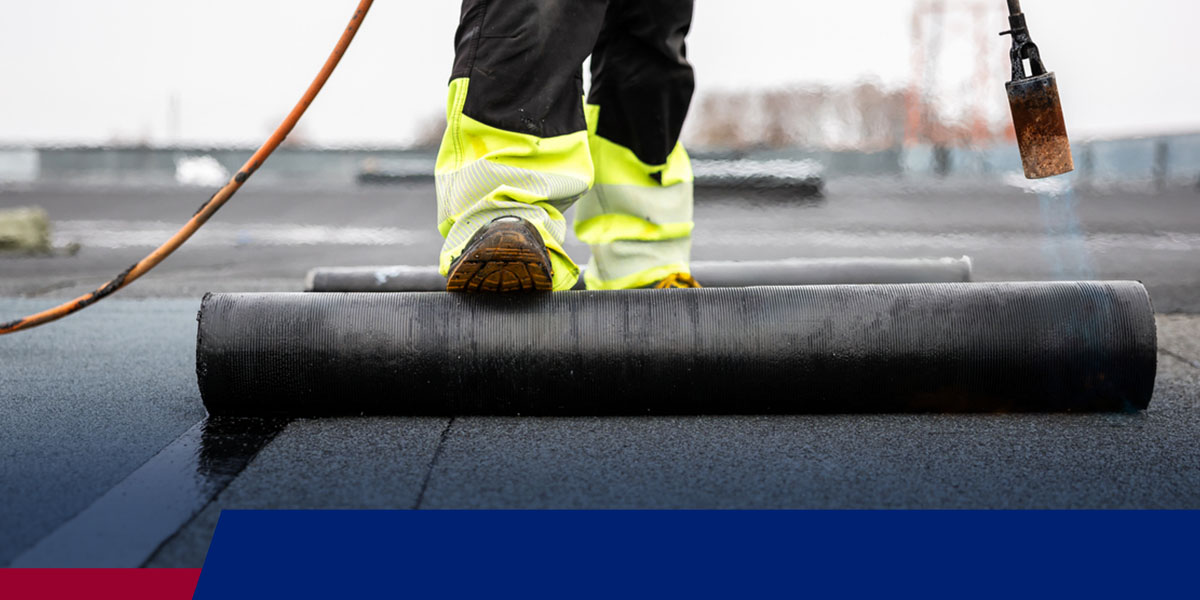
- Characteristics: Modified Bitumen is an evolution of Built-Up Roofing, using polymer-modified asphalt for improved flexibility and a rubberized appearance. It is constructed in multiple layers using factory-manufactured rolls, typically applied via torch, self-adhering or cold-applied methods.
- Common uses: This roofing is well-suited for commercial buildings with flat or low-slope roofs, especially those in areas with significant temperature fluctuations or structural movement. It’s frequently applied to retail centers, multifamily housing and industrial facilities.
- Advantages: MB systems are highly durable, resilient against foot traffic and punctures and boast superior flexibility that resists cracking in cold weather. Many systems offer reflective surfaces for energy savings, excellent waterproofing due to layered construction and relatively easy installation.
Partner With David Maines for Full-Service Commercial Roofing Needs
David Maines brings decades of commercial roofing expertise to projects involving commercial roof membrane types, replacements, restorations, maintenance and repairs. Founded in 1989, we provide full-service commercial roofing solutions across the Mid-Atlantic region. We even offer free inspections to help you determine the right next step for your facility.
Throughout every project, the David Maines team focuses on identifying the right roofing solution for your building, budget and long-term performance needs. We keep you informed at every step of the process and install quality, warranted roof systems from proven manufacturers, including Carlisle, Tremco, Garland and Firestone, for dependable commercial protection.
Contact us today to discuss your commercial roofing project, get a free quote and discover the David Maines difference for yourself.
Share