Table of Contents
- What Is TPO Roofing?
- Pros and Cons of TPO
- What Is EPDM Roofing?
- Pros and Cons of EPDM
- TPO vs. EPDM: Which Should You Choose?
- Commercial Roofing Materials FAQs
- Contact David Maines for Your TPO or EPDM Roofing Needs
The main difference between EPDM and TPO is their composition and long-term performance. A few key distinctions include:
- Energy efficiency: TPO’s white, reflective surface reflects UV rays. It provides passive cooling, reducing the need for air conditioning to keep your facility comfortable. EPDM’s darker surface absorbs heat from the sun, helping lower heating costs during colder months.
- Durability: TPO’s heat-welded seams create a strong, waterproof barrier that resists chemicals, mold and physical damage. EPDM’s high tensile strength and elongation capacity allow it to adapt to extreme temperatures.
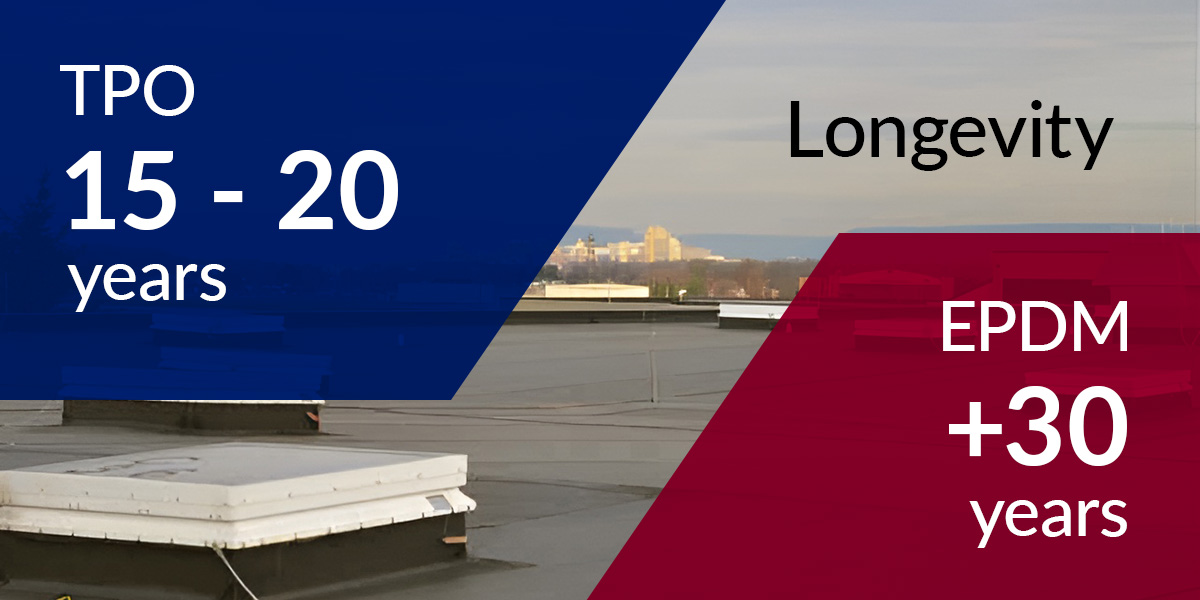
- Longevity: A well-installed EPDM roof can last for decades with proper preventive maintenance, while a TPO roof typically has a slightly shorter lifespan.
- Sustainability: Both TPO and EPDM are recyclable, and TPO leaches fewer chemicals into the environment, aligning with the growing industry shift toward eco-conscious building practices.
Commercial roofing is a major investment, and it’s important to ensure you’re choosing the right material for the job. If you need help deciding on a new roofing system for your commercial facility, we’re here to help you out. This guide will provide a brief overview of two of the most popular single-ply roofing materials available so you can make the most informed decision.
What Is TPO Roofing?
Also known as flexible polyolefin (FPO) in some European countries, thermoplastic polyolefin (TPO) is a relatively new single-ply roofing membrane. It consists of two sheets of flexible synthetic material reinforced by a non-woven scrim. This construction creates a highly durable, weather-resistant roofing system that can last for many years with the proper maintenance.
Contractors will typically attach TPO sheets to the surface using either a fusion adhesive or mechanical fasteners. And because TPO is a thermoplastic, contractors can weld the seams together using hot air rather than glue.
Pros and Cons of TPO
The most significant benefits of TPO roofing include:
- Environmental impact: TPO leaches fewer chemicals into the environment than PVC, another common roofing system. It’s also completely recyclable, making it a sustainable roofing material.
- Energy efficiency: Because most TPO membranes are white, they reflect UV light. This property provides passive cooling, reducing the amount of air conditioning you need to keep your facility comfortable.
- Durability: Heat welding creates strong, waterproof seams that are more durable than those seams attached using adhesive materials. TPO is also more resistant to chemicals, mold and physical damage than EPDM.
- Aesthetic appeal: The light color and appearance of a TPO roof is a striking choice that can make your building stand out visually.
- UV radiation resistance: TPO is highly resistant to UV rays, making it well-suited for outdoor applications like roofing.
Although there are many pros of choosing this material, it’s also important to acknowledge the disadvantages of TPO roofing:
- Complex installation: Air welding is a complicated procedure that should only be done by a certified professional. You can expect a TPO installation to take between one to two weeks depending on how large your roof is.
- Uncertain life span: TPO is a newer roofing material than EPDM, so it’s still difficult to accurately predict how long each installation will last. Most commonly, though, a TPO roof will last about 15 to 20 years.
What Is EPDM Roofing?
Ethylene propylene diene monomer (EPDM) is a synthetic rubber material made by polymerizing, or combining, three byproducts of crude oil processing.
Although it can come in many different colors, the material is often nicknamed “black roofing” because most facilities choose dark colors. Some EPDM installations also include a polyester, nylon or cloth reinforcement.
As a highly flexible rubber material, EPDM has many other uses besides roofing, including electrical insulation, tire tubing and even automotive parts.
Pros and Cons of EPDM
There are many benefits of EPDM roofing, such as:
- Flexibility: EPDM is a flexible material with a much higher tensile strength and elongation capacity than TPO, which enables it to adapt to colder temperatures.
- Temperature resistance: EPDM can withstand both extreme heat and extreme cold better than natural rubbers.
- Sustainability: Because EPDM is a type of rubber, it’s 100% recyclable. You can replace your roof and have peace of mind knowing the material will stay out of landfills.
- Cost-effectiveness: Typically, EPDM costs less per square inch than TPO. However, costs will vary depending on thickness, surface area and roofing manufacturer.
- Longevity: A well-installed EPDM system can last more than 30 years with proper preventive maintenance.
- Passive heating: Because most EPDM installations are dark in color, they absorb the sun’s rays and provide passive heating to the facility, reducing the costs of heating during colder months.
Some of the disadvantages of EPDM roofing include:
- Low durability: EDPM has weaker seams and lower puncture resistance than TPO, which can make it unsuitable for areas where it is likely to experience serious impact.
- Susceptibility to ponding: Poorly installed EPDM roofs are more likely to develop “ponds” of standing water, which can cause mold to grow on its surface and cause long-term damage.
TPO vs. EPDM Roofing: Which Should You Choose?
Whether you’re considering EPDM or TPO, there are several benefits that they share. For example, both TPO and EPDM are single-ply roofing materials, which means they come in wider sheets than asphaltic common roofing systems and require fewer seams during installation.
Additionally, because both roofing systems are Class A fire-resistant, they’re excellent choices for buildings where safety is a chief concern.
While the two share similarities, though, understanding their key differences will help you make the best decision for your facility:
- Cost: EPDM is usually cheaper per square foot than TPO, so it may be a more suitable option if you’re on a tight budget.
- Durability: TPO is generally more durable because it’s resistant to high impact and punctures.
- Longevity: EPDM roofs typically last longer than TPO options because of their high temperature and UV resistance. However, it’s essential to remember that maintenance contributes to a roof’s longevity.
- Appearance: Although TPO’s white color may be an attractive choice, EPDM typically provides more versatility in terms of color options.
- Environmental impact: Although both materials are recyclable, TPO is more energy-efficient due to its UV resistance and light color.
- Your location: If you live in a warmer region, you’ll benefit more from TPO’s ability to reflect light. Or, if you live in a colder region, EPDM’s ability to provide passive heating is the better option.
Uncertain which roofing system you should install? Contact an experienced roofing contractor to discuss your options. They can evaluate your roof and determine the most suitable choice based on factors such as surface area, budget, location, maintenance needs and more.
Plus, a reliable roofing services company can help you ensure your roof is installed properly, which is essential for maximizing longevity and keeping costs low.
Commercial Roofing Materials FAQs
Here are some frequently asked questions about commercial roofing materials.
What Are the Advantages of Different Commercial Roofing Materials?
Each commercial roofing material offers specific advantages tailored to particular needs. TPO is known for its energy efficiency, high durability and sustainability as a recyclable material. EPDM offers excellent flexibility and temperature resistance, cost-effectiveness and a long lifespan. EPDM can also provide passive heating due to its dark color.
What Is the Best Material for Commercial Roofing?
The best commercial roofing materials are TPO and EPDM. TPO is ideal for warmer climates due to its reflective surface and energy efficiency, while EPDM is the stronger choice for colder regions thanks to its passive heating properties and 30+ year lifespan. A certified roofing contractor can evaluate your facility and help you determine the best fit.
Which Is Better, TPO or EPDM?
Neither TPO nor EPDM is better. TPO provides durability and energy efficiency in warmer climates, while EPDM typically costs less per square foot and lasts longer overall. The right choice comes down to your climate, budget and long-term performance goals.
What Are the Different Types of Commercial Roofs?
The different types of commercial roofs include built-up roofing (BUR), EPDM rubber, metal, shingle, slate and tile. Single-ply options are among the most popular for low-slope and flat roofs because they come in wider sheets, require fewer seams and offer long-term cost-effectiveness.
Contact David Maines for Your TPO or EPDM Roofing Needs
Looking for the right system for your low-slope roof? Reaching out to a professional commercial roofing services company is the best place to start.
At David Maines & Associates, Inc., we’re dedicated to providing our customers throughout the Mid-Atlantic region with the most professional and efficient service possible. We offer access to the best-rated roofing systems, including products from top manufacturers like Firestone, Tremco, Carlisle and more. You can count on us for roof repairs and maintenance for many years to come.
If you’d like to learn more about your roofing options, our experts can help. Contact us today to request a free, no-obligation inspection or quote.
Share